
“`html
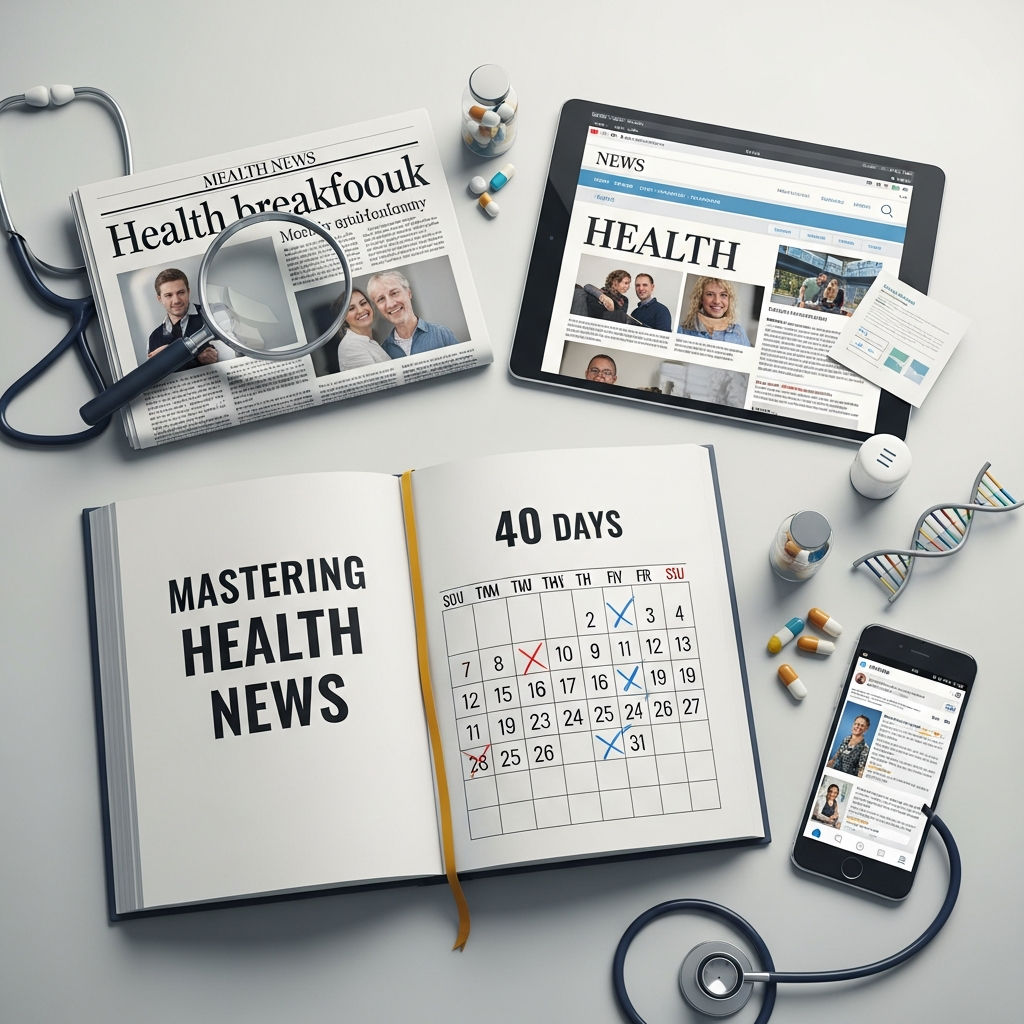
Mastering Health News: A 40-Day Blueprint for Navigating Wellness Trends
In an era of information overload, the average person is bombarded with thousands of health-related headlines every month. One day, coffee is a miracle longevity elixir; the next, it’s a source of anxiety and digestive distress. Navigating this sea of conflicting data requires more than just an interest in wellness—it requires health literacy.
To “master” health news doesn’t mean becoming a medical doctor in 40 days. Instead, it means developing a bulletproof filter to distinguish between rigorous science and sensationalist “health-tainment.” This 40-day guide will transform you from a passive consumer into a critical analyst of medical news.
Phase 1: Building Your Foundation (Days 1–10)
The first ten days are about “digital hygiene” and understanding the language of science. You cannot master health news if your primary sources are algorithm-driven social media feeds.
- Days 1-3: Cleanse Your Feed. Unfollow “wellness influencers” who sell supplements and lack medical credentials. Replace them with primary sources like the New England Journal of Medicine (NEJM), The Lancet, and JAMA.
- Days 4-7: Learn the Hierarchy of Evidence. Not all studies are created equal. Understand that a “Meta-Analysis” or “Systematic Review” carries more weight than a single “Case Study” or an animal trial.
- Days 8-10: Master Basic Terminology. Learn the difference between absolute risk and relative risk. When a headline says a food “doubles your risk” of a disease, it might mean the risk went from 1% to 2%—a massive relative increase, but a small absolute change.
Phase 2: Developing a Critical Lens (Days 11–20)
Once you have the right sources, you need to learn how to read them. This phase focuses on spotting red flags in health reporting.
The Anatomy of a Health Headline
Most health news is written to generate clicks, not to inform. During this phase, practice the “Head-to-Study” comparison. Read a mainstream news article about a new study, then find the original study abstract on PubMed.
- Identify the Sample Size: Was the study performed on 10 people or 10,000? Small sample sizes (low “n”) are prone to statistical flukes.
- Check for Conflict of Interest: Look at the “Funding” section. Is a study touting the benefits of sugar funded by the beverage industry?
- Correlation vs. Causation: This is the golden rule of health news. Just because people who eat blueberries live longer doesn’t mean blueberries *caused* the longevity. They might simply be wealthier and have better access to healthcare.
Phase 3: Deep Dives and Specialized Literacy (Days 21–30)
Now that you can spot a bad study, it’s time to understand the nuances of specific health niches. Focus on the areas that impact your life most—nutrition, mental health, or longevity science.
- Nutrition News: Understand that most nutrition science relies on “food frequency questionnaires,” which are notoriously unreliable. Be skeptical of “superfood” claims.
- Mental Health and Neurology: Learn to look for the “placebo effect” in trials for supplements and therapies. The mind is a powerful healer, and many “breakthroughs” fail to outperform a sugar pill in the long run.
- Longevity and Biohacking: This is the most “hype-heavy” sector. Distinguish between in vitro (test tube), in vivo (animal), and human clinical trials. If a longevity drug only works in mice, it is a decade away from being relevant to you.
Phase 4: Synthesis and Application (Days 31–40)
The final ten days are about turning your knowledge into a sustainable system. Mastery is not just about knowing; it’s about applying information without falling into the “anxiety trap.”
Creating Your “Health News Stack”
By day 35, you should have a curated list of newsletters and podcasts that provide expert synthesis. Sources like The Peter Attia Drive, FoundMyFitness, or the Cochrane Library provide deep-dive analyses that do the heavy lifting for you.
The “Wait-and-See” Protocol
One of the hallmarks of a health news master is patience. Science is a slow, iterative process. During these final days, practice the 30-day rule: when a “groundbreaking” new study comes out, wait 30 days before changing your behavior. This allows time for the scientific community to peer-review the findings and for potential flaws to emerge.
Summary of the 40-Day Mastery Journey
- Week 1: Source purification and basic scientific literacy.
- Week 2: Learning to spot bias and understanding statistical significance.
- Week 3: Navigating specific fields like nutrition and longevity.
- Week 4: Building a personal vetting system for new information.
- Final Days: Synthesizing data into actionable, low-stress lifestyle choices.
Why Health Literacy Matters for Your Future
Mastering health news is the ultimate form of preventative medicine. When you can filter out the noise, you save money on useless supplements, reduce the stress of “health scares,” and focus your energy on the foundational habits that actually work: sleep, movement, and whole foods.
By the end of these 40 days, you won’t just be better informed; you will be “anti-fragile” against the marketing machines of the wellness industry. You will have the tools to make decisions based on data, not fear, ensuring a healthier and more empowered life.
Conclusion
Health news mastery is a lifelong skill, but the foundation can be built in just over a month. By transitioning from a passive scroller to an active investigator, you take control of your biological destiny. Remember: extraordinary claims require extraordinary evidence. Now, you have the toolkit to demand that evidence before you believe the hype.
“`